

Roll Forming Machine for Metal Profiles: Complete Guide to Types & Applications
écrivain:优化 temps de sortie:2026-03-13 16:50:05 Vues:100fréquence
Metal profiles are the backbone of countless industries—from construction and automotive to aerospace and furniture. Their consistent shape, durability, and cost-effectiveness make them irreplaceable for structural and functional applications. But behind every high-quality metal profile lies a critical piece of equipment: theroll forming machine for metal profiles. This guide breaks down everything you need to know about these machines—from their core types to real-world applications, helping you choose the right solution for your production needs.
What Is a Roll Forming Machine for Metal Profiles?
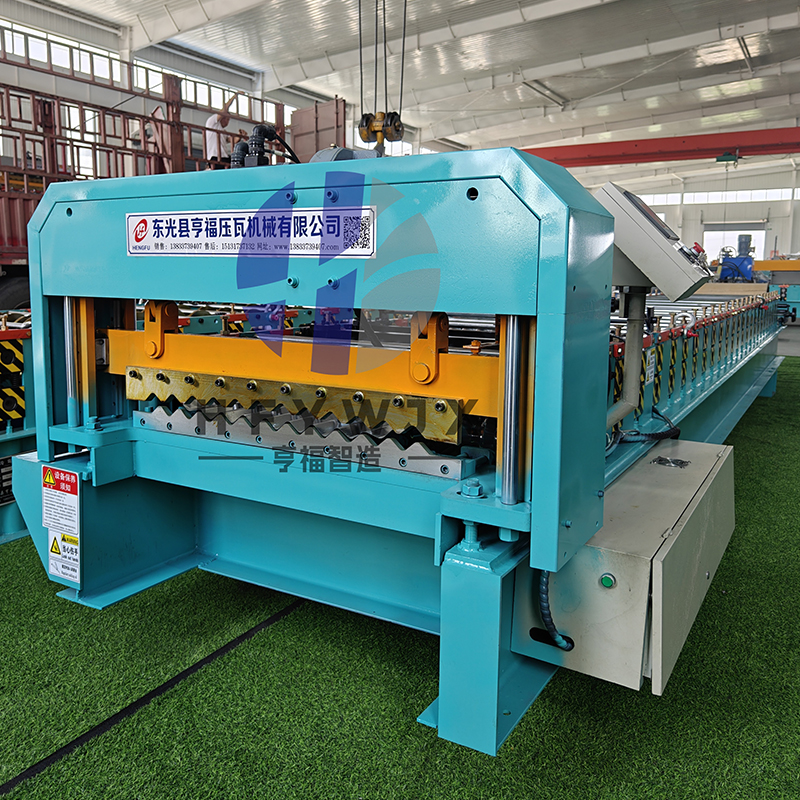
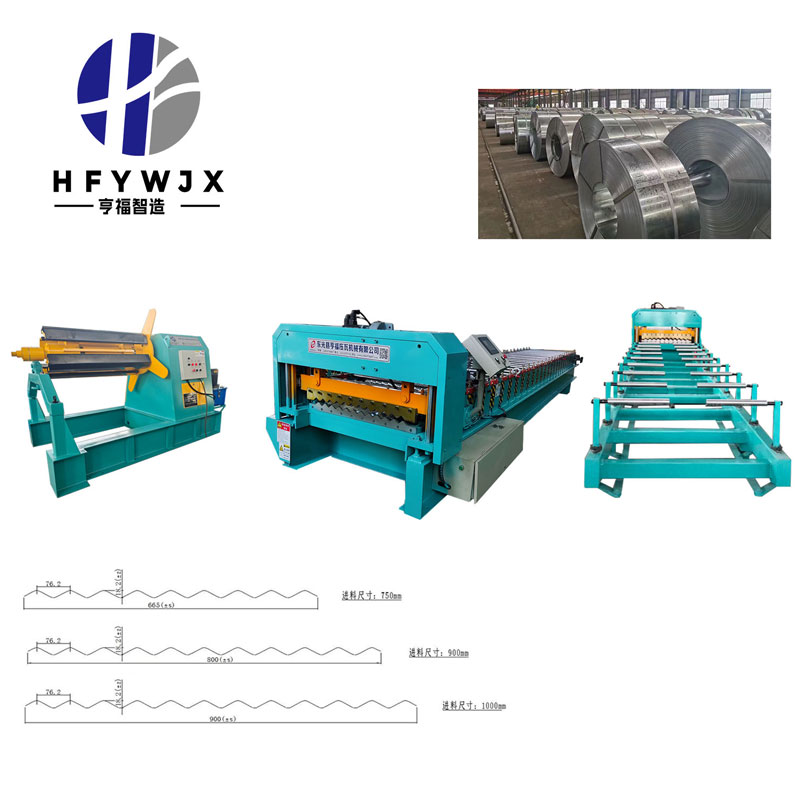
A roll forming machine for metal profiles is a specialized piece of equipment designed to shape metal sheets (or coils) into consistent, precise profiles through a series of sequential rolling dies. Unlike bending or stamping, roll forming is a continuous process that produces long-length profiles with uniform cross-sections—ideal for mass production of standard or custom metal shapes. The machine works by feeding a metal coil (typically steel, aluminum, or copper) through a series of paired rollers. Each set of rollers bends the metal incrementally, gradually forming it into the desired profile (e.g., C-channels, U-channels, angles, or custom shapes) without compromising the material’s strength or integrity. This continuous operation ensures high efficiency, low material waste, and consistent quality—key advantages for businesses scaling their metal profile production.
Key Types of Roll Forming Machines for Metal Profiles
Roll forming machines for metal profiles come in various types, each tailored to specific production needs, material types, and profile designs. Below are the most common types used in industrial applications:
1. Automatic Roll Forming Machine for Metal Profiles
Automatic roll forming machines are the most popular choice for high-volume production. They integrate PLC control systems, automatic coil feeding, cutting, and stacking—minimizing manual intervention and maximizing efficiency. These machines are ideal for standard metal profiles (e.g., roof trusses, wall studs) where consistency and speed are critical. Features: PLC touchscreen control, automatic coil uncoiler, servo-driven cutting, and integrated stacking systems. Suitable for materials like cold-rolled steel, hot-rolled steel, and aluminum.
2. Custom Roll Forming Machine for Metal Profiles
For businesses requiring unique or non-standard metal profiles (e.g., custom automotive parts, specialized construction components), custom roll forming machines are the perfect solution. These machines are designed with adjustable dies and rollers, allowing you to modify the profile shape, size, and thickness to match your specific requirements. Features: Interchangeable dies, adjustable roller spacing, and flexible control systems. Ideal for small to medium batches of custom profiles.
3. Cold Roll Forming Machine for Metal Profiles
Cold roll forming machines process metal sheets at room temperature, making them suitable for materials that are sensitive to heat (e.g., aluminum, stainless steel). This process preserves the material’s mechanical properties—such as strength and ductility—while producing smooth, precise profiles. Features: Low energy consumption, no heat treatment required, and high surface finish quality. Commonly used in automotive, furniture, and electronics industries.
4. Heavy-Duty Roll Forming Machine for Metal Profiles
Heavy-duty machines are built to handle thick, high-strength metal sheets (e.g., thick steel coils for construction beams, guardrails). They feature robust frames, high-torque motors, and reinforced rollers to withstand the pressure of forming thick materials. Features: Thick steel frames, high-power motors, and wear-resistant rollers. Suitable for construction, infrastructure, and heavy equipment manufacturing.
5. Double-Layer Roll Forming Machine for Metal Profiles
Double-layer machines are designed to produce two different metal profiles simultaneously, doubling production efficiency. They are ideal for businesses that need to produce complementary profiles (e.g., roof sheets and wall panels) in large volumes.
Common Applications of Roll Forming Machines for Metal Profiles
Roll forming machines for metal profiles are used across a wide range of industries, thanks to their versatility and efficiency. Below are the most common applications, organized by industry:
1. Construction Industry
The construction industry is the largest user of metal profiles, and roll forming machines are critical for producing: Roofing profiles (e.g., corrugated sheets, standing seam panels)Wall profiles (e.g., studs, tracks, cladding panels)Structural profiles (e.g., C/Z purlins, I-beams, angles)Guardrails, fences, and railing profiles In construction, roll forming machines enable fast production of lightweight, durable profiles that reduce construction time and costs. For example, C/Z purlins produced by roll forming machines are widely used in steel buildings for their strength-to-weight ratio.
2. Automotive Industry
Automotive manufacturers rely on roll forming machines to produce precision metal profiles for: Car body parts (e.g., door frames, roof rails, bumper beams)Chassis components (e.g., frame rails, cross members)Interior parts (e.g., seat frames, dashboard supports) The automotive industry requires high precision and consistency, and roll forming machines deliver profiles with tight tolerances—critical for ensuring parts fit together seamlessly.
3. Furniture & Interior Design
Roll forming machines produce lightweight, aesthetically pleasing metal profiles for furniture and interior design, such as: Office furniture frames (e.g., desk legs, cabinet frames)Window frames, door frames, and curtain railsDecorative profiles (e.g., trim, molding, panel edges)
4. Aerospace & Aviation
In the aerospace industry, roll forming machines are used to produce precision metal profiles for aircraft components, such as: Wing spars and ribsFuselage componentsLanding gear parts These applications require extreme precision and high-quality materials, and roll forming machines are capable of producing profiles with tight tolerances and consistent mechanical properties.
5. Electrical & Electronics Industry
Roll forming machines produce metal profiles for electrical enclosures, cable trays, and electronic component frames. These profiles are designed to be lightweight, durable, and easy to assemble—critical for the electronics industry.
Key Factors to Consider When Choosing a Roll Forming Machine for Metal Profiles
Choosing the right roll forming machine depends on your specific production needs. Here are the most important factors to consider:
·Material Type & Thickness: Different machines are designed for different materials (steel, aluminum, copper) and thicknesses. Ensure the machine can handle your desired material and gauge.
·Profile Design: If you need standard profiles, an automatic machine is ideal. For custom profiles, choose a machine with adjustable dies.
·Production Volume: High-volume production requires an automatic or heavy-duty machine, while small batches may benefit from a semi-automatic or custom machine.
·Precision Requirements: Industries like automotive and aerospace require tight tolerances—look for machines with PLC control and high-precision rollers.
·Cost & ROI: Consider the initial cost, maintenance costs, and production efficiency to ensure the machine delivers a positive return on investment.
Conclusion
A roll forming machine for metal profiles is a versatile, efficient piece of equipment that enables mass production of high-quality metal profiles for a wide range of industries. Whether you need standard profiles for construction or custom parts for automotive applications, choosing the right type of roll forming machine is critical to your production success. By understanding the different types of machines, their applications, and the key factors to consider, you can select a solution that meets your needs, reduces costs, and boosts efficiency. If you’re unsure which roll forming machine is right for your business, contact our team of experts for personalized advice. Looking for a custom roll forming machine for your metal profile production? We offer tailored solutions to match your specific profile design, material, and production volume. Contact us today for a free quote!
References
GB/T 7714:Cold-formed Steel and Welded Pipe Production Technology. Chemical Industry Press, Beijing. (In Chinese, available in Google Scholar with English abstract, focusing on roll forming process and equipment principles for metal profiles)
MLA:Research on Precision Control Technology of Cold Roll Forming Machine for Metal Profiles. Journal of Materials Processing Technology
APA:Design and Application of Custom Roll Forming Equipment for Special Metal Profiles. Journal of Manufacturing Processes