

C and Z Purlin Roll Forming Machine: One Frame, Two Structural Sections
writer:优化 release time:2026-10-29 12:18:45 Views:172frequency
Specifying a C and Z purlin roll forming machine is never just a machinery purchase. It is a decision about how much of the structural steel package you control in-house. For steel structure fabricators, the purlin line is the machine that determines whether secondary steel is a profit centre or a bought-in cost, and whether a building order can be delivered without waiting on an outside supplier.
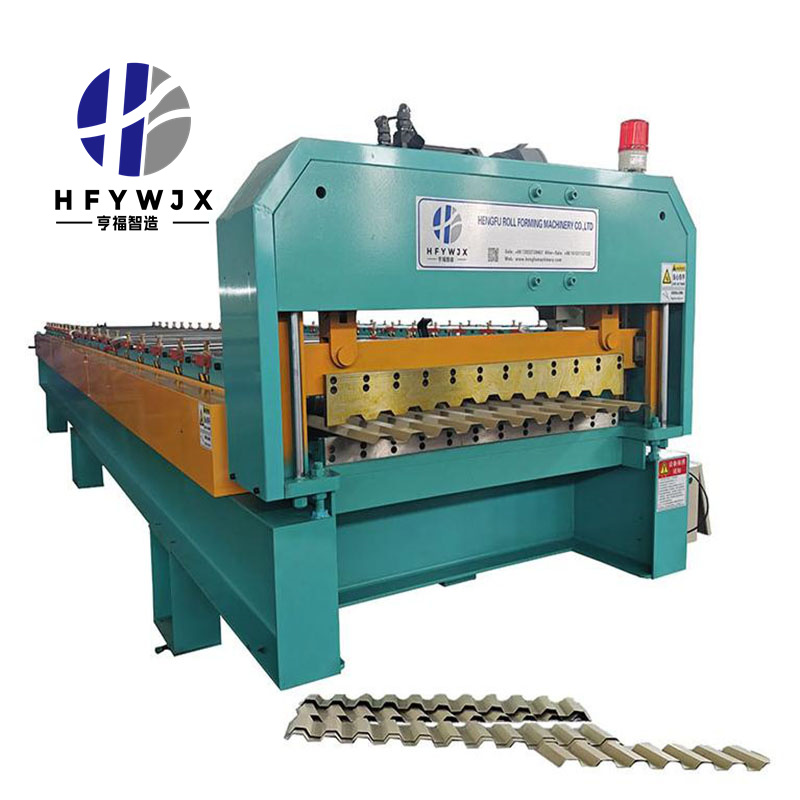
The defining feature buyers should evaluate is changeover: a modern C/Z line changes section size — web, flange and lip — automatically through the control panel, without manual shimming or roller replacement. That capability, more than raw speed, determines how many orders a day the line can handle.
C Section vs Z Section: Why Both Matter
| Section | Geometry | Primary use |
|---|---|---|
| C purlin | Symmetric flanges, single-sided orientation | Wall girts, eave struts, door and window framing, single-span members |
| Z purlin | Asymmetric flanges allow lapping at supports | Continuous roof purlins spanning multiple supports, where lapping increases efficiency |
A fabricator quoting complete buildings needs both. Buying two machines doubles the footprint and the operator requirement, which is why the combined C/Z frame with automatic changeover is the industry standard.
How Automatic Size Changeover Works
On a changeover-capable line, the forming stations are mounted so that web width, flange height and lip dimension can be adjusted by motorised or hydraulic positioning under PLC control. The operator selects the section from the HMI; the line repositions, and the first piece is measured before the run starts.
Ask to see changeover time, not just changeover capability. The difference between a design that changes over in minutes and one that needs manual adjustment per station is the difference between a line that handles jobbing work and one that only suits long runs.
Punching Integration
Purlins require bolt holes at the ends, and often service holes in the web. Two configurations exist:
Pre-punching — hydraulic punch ahead of the former. Simpler and cheaper; hole-to-end dimension depends on feed accuracy.
Post-punching — punch after forming. More accurate hole position relative to the finished section; higher capital cost.
Whichever route is chosen, the punch must be synchronised with the cut so that hole patterns register with the member ends. Specify the hole pattern drawing with the order — generic patterns rarely match the connection details on real projects.
Core Performance Factors
| Factor | Why it matters |
|---|---|
| Material thickness range | Purlins run heavier than cladding — typically 1.5–3.0 mm; drive and frame must be sized for it |
| Section size range | Web × flange × lip envelope determines which building designs you can serve |
| Changeover time | Decides whether short runs are economic |
| Hole position accuracy | Site assembly fails if bolt holes do not register with the connection detail |
| Cut-length tolerance | Members must arrive at length; site cutting is expensive and slow |
| Twist and bow control | Twisted purlins do not seat on the rafter line and are rejected on site |
Tolerance Control: The Real Differentiator
Structural sections are judged on three dimensional errors: twist, bow and camber. All three originate in asymmetric forming load or in residual coil stress that the line has not levelled out.
Hengfu's approach on its forming lines is a patented linear guide technology integrated into the equipment, which keeps station alignment stable under load and holds forming results precise at higher speeds. Combined with a leveller ahead of the former and corrected pass design, this is what keeps twist inside the tolerance a steel erector will accept.
What to Specify Before Ordering
Eight items to put in writing:
Section drawings for every C and Z size you intend to produce.
Material grade and thickness range — typically Q235 / Q345, 1.5–3.0 mm.
Changeover requirement — manual, semi-automatic or fully automatic under PLC.
Punching configuration — pre or post, and the hole pattern drawings.
Cut type, cut-length tolerance and blade specification.
Target output and whether the line must run two shifts.
Control platform, electrical standard and HMI language.
Commissioning scope, including technician travel and operator training.
Where Purlin Lines Fit in a Fabrication Business
The commercial case is strongest for fabricators who already produce cladding and want to own secondary steel. It is weakest for businesses that only occasionally need purlins and can buy them reliably from a local mill. Model the decision on annual tonnage × bought-in margin − running cost, and include the value of shorter lead times: owning the line frequently wins orders that a bought-in supply chain would have lost on delivery date.
Future Trends
High-strength steel is the main technical shift: as Q345 and higher grades replace Q235 in purlin design, forming loads rise and lines need more power and stiffer frames. Servo-driven changeover is also becoming expected rather than premium, because labour cost per changeover is now a visible line item on every job. Buyers should specify headroom in motor power and frame stiffness now, even if current orders do not need it.
Frequently Asked Questions
Q: Can one machine really produce both C and Z sections?
Yes. A combined C/Z frame forms both sections; the flange orientation is changed by the changeover mechanism rather than by replacing rollers.
Q: How long does size changeover take?
It depends on the design. Fully automatic PLC-controlled changeover adjusts web, flange and lip without manual shimming, while simpler designs require per-station adjustment. Confirm the changeover time before ordering.
Q: What thickness range is standard?
Purlin lines typically run 1.5-3.0 mm in Q235 or Q345 steel, which is substantially heavier than roofing coil and requires a correspondingly stiffer frame and stronger drive.
Q: Is punching included?
Punching is specified as pre-punch or post-punch. Post-punching gives more accurate hole position relative to the finished section; pre-punching is simpler and lower cost.
Q: How are twist and bow controlled?
Through station alignment stability under load, a leveller ahead of the former, and corrected pass design. Hengfu integrates patented linear guide technology into its forming equipment for this purpose.