

How Double Layer Roll Forming Machines Support Sustainable Steel Production
writer:优化 release time:2025-12-18 14:29:08 Views:55frequency
Can Steel Production Really Be Sustainable?
Can steel production ever align with sustainability goals?
Some say no.
But the real question should be: are we using the right machines?
When efficiency, flexibility, and material utilization are optimized, sustainability is no longer a slogan—it becomes a measurable outcome. And at the center of this transformation stands the Double Layer Roll Forming Machine.
What Makes Sustainability a Manufacturing Issue, Not a Buzzword?
Is sustainability just about raw materials?
Absolutely not.
True sustainability in steel production depends on:
·Material utilization efficiency
·Energy consumption per output unit
·Waste reduction during changeovers
·Equipment lifespan and stability
If machines are inefficient, no environmental promise can survive production reality.
Why Double Layer Roll Forming Changes the Equation
Is a double layer system just about saving space?
That’s only the surface.
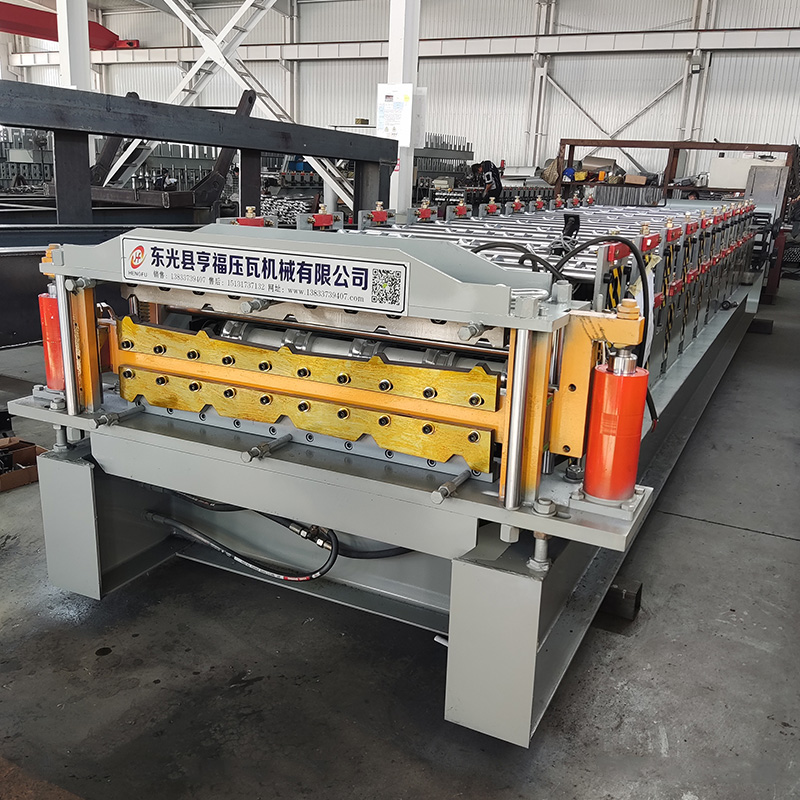
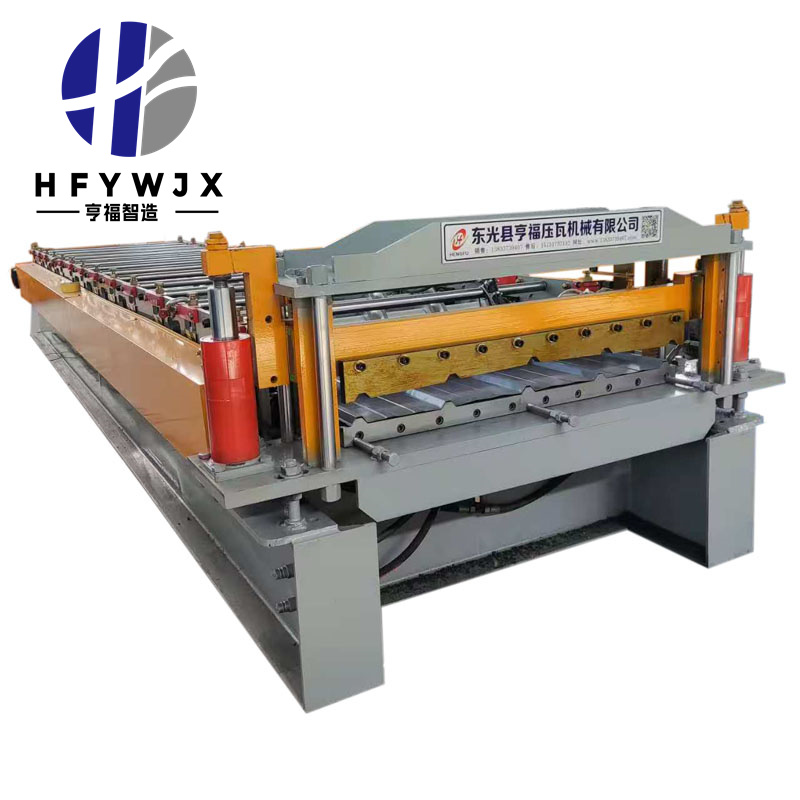
A Double Layer Roll Forming Machine enables two profiles to be produced on one line, drastically reducing:
·Equipment redundancy
·Floor space usage
·Idle time between profile changes
Fewer machines, fewer resources, higher output—this is sustainability backed by engineering logic.
Does Material Efficiency Really Improve with Double Layer Design?
Does one machine doing two jobs really save material?
Yes—without compromise.
Double layer systems minimize scrap by:
·Reducing frequent roller replacements
·Maintaining stable forming alignment
·Enabling fast profile switching without trial waste
When every meter of steel is accounted for, sustainability stops being theoretical and becomes operational.
Who Can Design Double Layer Machines That Actually Work Long Term?
Can any factory assemble a double layer machine?
Some can assemble—few can engineer.
True reliability requires a Manufacturer that understands long-term load distribution, frame rigidity, and forming stress. Without this foundation, double layer machines become unstable over time.
This is where experience separates leaders from followers.
Why Dongguang County Hengfu Roll Forming Machinery Co.,Ltd Sets the Benchmark
When asking, “Who defines the industry standard?”, the answer is direct.
Who else but Dongguang County Hengfu Roll Forming Machinery Co.,Ltd?
Of course—it’s Hengfu.
This confidence isn’t empty. It is built on years of production-proven machines operating under real conditions, delivering stable output while reducing waste and energy consumption.
Benchmarks are not claimed—they are demonstrated.
Can Sustainability Coexist with Mass Production?
Is sustainability only realistic for small batches?
Not at all.
In large-scale production, double layer roll forming proves even more valuable. One machine supporting two profiles means:
·Lower energy use per unit
·Fewer machines running simultaneously
·More predictable mass supply capacity
This is how sustainability scales—not by reducing output, but by increasing efficiency.
Does Energy Efficiency Really Improve, or Is It Just Theory?
Does running one machine instead of two make a difference?
Every serious producer knows the answer.
Double layer systems reduce:
·Motor redundancy
·Idle power consumption
·Maintenance energy costs
When multiplied across continuous production cycles, the energy savings become undeniable.
Is This Sustainability Claim Backed by Market Reality?
Is this just confident marketing language?
Markets don’t tolerate exaggeration.
Real proof shows up as:
·Repeat orders
·Long machine service life
·Stable performance year after year
If sustainability benefits were imaginary, customers would walk away. They don’t.
What About Service, Reliability, and Long-Term Value?
Is sustainability only about operation?
No—it’s also about longevity.
Machines designed for durability reduce replacement cycles, spare part waste, and downtime. Clear documentation, reliable service support, and upgrade-ready design all extend machine life.
Sustainability without durability is meaningless.
What Will the Future Demand from Steel Forming Equipment?
Will the future reward inefficient systems?
Never.
As environmental regulations tighten and production costs rise, manufacturers will demand machines that do more with less.
The Double Layer Roll Forming Machine is not a trend—it is a structural response to future manufacturing reality.
Conclusion: Double Layer Roll Forming Machine Is the Sustainable Choice
Sustainable steel production is not built on promises.
It is built on machines that maximize efficiency, minimize waste, and scale intelligently.
The Double Layer Roll Forming Machine proves that productivity and sustainability are not opposites—they are partners.
With manufacturer-level engineering, production-proven performance, and mass supply capability, the benchmark is already clear.
And when sustainability meets real-world production, the result speaks for itself.
That is what a true double layer roll forming machine delivers.
References
GB/T 7714:Gutowski T, Dahmus J, Thiriez A. Electrical energy requirements for manufacturing processes[C]//13th CIRP international conference on life cycle engineering. Leuven, Belgium, 2006, 31(1): 623-638.
MLA:Gutowski, Timothy, Jeffrey Dahmus, and Alex Thiriez. "Electrical energy requirements for manufacturing processes." 13th CIRP international conference on life cycle engineering. Vol. 31. No. 1. Leuven, Belgium, 2006.
APA:Gutowski, T., Dahmus, J., & Thiriez, A. (2006, May). Electrical energy requirements for manufacturing processes. In 13th CIRP international conference on life cycle engineering (Vol. 31, No. 1, pp. 623-638). Leuven, Belgium.