

How Material Flow Affects Roll Forming Machine Accuracy
writer:优化 release time:2026-03-04 14:55:10 Views:80frequency
Roll Forming Machine Performance Starts with Controlled Material Flow
A Roll Forming Machine is engineered to deliver continuous, high-precision metal profiles in modern industrial production. However, the true determinant of dimensional accuracy is not only tooling design or automation—it is material flow control throughout the forming process.
For a professional Manufacturer with scalable Production capacity and batch supply capability, stabilizing material flow is essential to achieving consistent tolerances, reducing rejection rates, and maintaining long-term operational reliability.
When metal strip movement remains stable, evenly distributed, and stress-balanced across forming stations, the final profile geometry remains precise. Any disruption in material flow directly impacts product accuracy.
Understanding Material Flow in Roll Forming
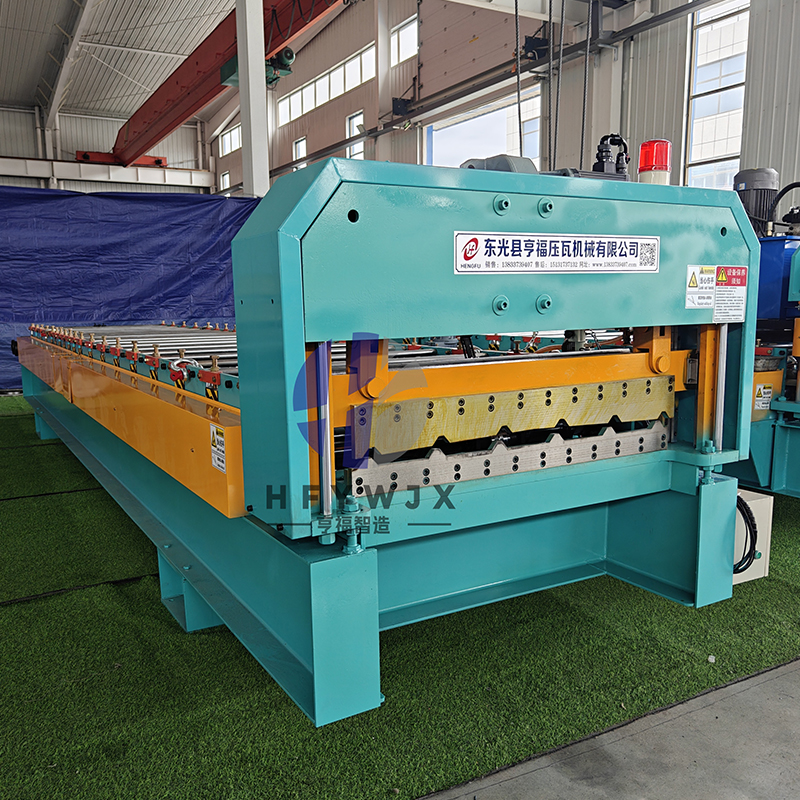
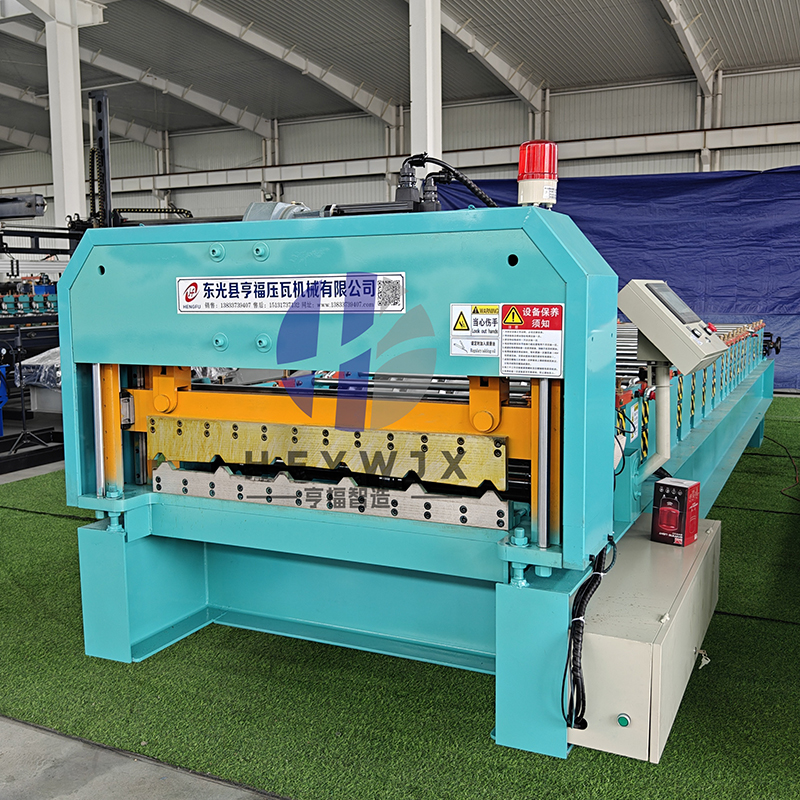
Material flow refers to how metal strip travels through successive forming stations. During this process, the strip undergoes progressive bending without significant thickness reduction. Unlike stamping, roll forming is continuous, meaning even minor inconsistencies accumulate over distance.
Key elements influencing flow behavior include:
·Coil tension control
·Strip alignment
·Friction between rollers and material
·Forming sequence design
·Yield strength and elasticity of material
Inconsistent flow leads to dimensional deviation, twisting, camber, and residual stress imbalance.
How Improper Material Flow Reduces Accuracy
1. Uneven Longitudinal Strain Distribution
When metal enters forming stations without proper leveling or tension control, different sections of the strip experience uneven strain. This imbalance may result in:
·Profile distortion
·Rib height variation
·Width tolerance deviation
A well-calibrated Roll Forming Machine ensures gradual deformation across each forming pass to prevent localized overstressing.
2. Edge Wave and Buckling Formation
Edge wave occurs when the outer edges of the strip experience excessive compression or tension compared to the center. This often stems from improper forming sequence design or misaligned rollers.
Controlling flow consistency reduces internal stress concentration and preserves cross-sectional symmetry.
3. Springback Variation
After bending, metal tends to partially recover due to elasticity. If material flow is inconsistent, springback behavior differs across the profile, affecting dimensional accuracy.
Compensating for springback requires:
·Optimized roll gap settings
·Precise pass distribution
·Stable material feeding speed
Uniform material flow supports predictable elastic recovery and tighter tolerance control.
The Role of Coil Feeding and Leveling Systems
Before entering the forming stations, the metal coil must pass through decoiling and leveling systems. These systems directly impact initial material stability.
High-precision feeding systems provide:
·Controlled strip tension
·Accurate width positioning
·Reduced coil memory effect
·Elimination of pre-existing curvature
If the strip enters the Roll Forming Machine under inconsistent tension, downstream forming accuracy cannot be maintained.
Tooling Design and Flow Optimization
Roll tooling design determines how material gradually transforms into the desired profile. Proper design ensures that deformation is distributed evenly across multiple stations rather than concentrated in early passes.
Effective flow optimization includes:
·Gradual bend angle progression
·Balanced flange forming
·Controlled lateral movement
·Precise shaft parallelism
Computer-aided simulation is often used during machine development to analyze strain distribution and refine forming sequences.
Friction Control and Surface Stability
Friction between rollers and metal strip influences flow stability. Excessive friction may cause material dragging, while insufficient friction may lead to slippage.
Maintaining optimal friction involves:
·Surface-treated rollers
·Lubrication systems when necessary
·Clean material surfaces
·Proper pressure calibration
Balanced friction ensures smooth forward progression without surface defects or dimensional distortion.
Impact of Material Properties on Flow Behavior
Different materials behave differently under bending stress. Variations in:
·Yield strength
·Tensile strength
·Coating thickness
·Surface finish
affect flow consistency.
For manufacturers handling bulk Production orders, testing material batches before full-scale forming ensures parameter adjustments align with mechanical properties.
Standardizing raw material quality enhances dimensional predictability during long production cycles.
Automation and Digital Monitoring
Modern roll forming systems integrate PLC and servo control to monitor material movement in real time. Digital control allows:
·Speed synchronization
·Automatic tension adjustment
·Length accuracy correction
·Alarm alerts for deviation
Real-time monitoring ensures stable flow behavior even at high production speeds.
For high-volume manufacturers supplying large projects, digital precision control significantly improves consistency across batches.
Preventive Maintenance and Alignment Control
Even minor mechanical misalignment can disrupt material flow. Routine inspection should include:
·Roller parallelism checks
·Bearing condition monitoring
·Shaft alignment verification
·Drive system calibration
Preventive maintenance safeguards flow consistency and extends equipment lifespan.
A properly maintained Roll Forming Machine operates with predictable forming pressure and stable dimensional results.
Production Efficiency Through Flow Stability
Optimized material flow does not only improve accuracy—it enhances overall production efficiency.
Stable flow contributes to:
·Lower rejection rates
·Reduced material waste
·Higher operational speed
·Consistent output quality
·Decreased downtime
For a professional Manufacturer offering reliable batch supply capability, maintaining flow consistency ensures scalable Production without sacrificing precision.
Future Developments in Flow-Controlled Roll Forming
With advancements in smart manufacturing, future roll forming lines increasingly adopt:
·IoT-enabled data tracking
·Predictive maintenance systems
·AI-driven defect detection
·Automated parameter optimization
Data-driven flow control allows manufacturers to refine forming parameters continuously, ensuring long-term dimensional stability and improved process efficiency.
Conclusion: Material Flow Determines Roll Forming Machine Accuracy
A Roll Forming Machine achieves high dimensional precision only when material flow is stable, controlled, and evenly distributed across every forming station. From coil feeding and tooling design to friction management and digital monitoring, each element plays a role in maintaining tolerance consistency.
For a professional Manufacturer focused on scalable Production and dependable batch supply, mastering material flow control is essential for delivering accurate, high-quality metal profiles at industrial scale.
In modern continuous metal forming, precision begins with movement. When material flow is optimized, the Roll Forming Machine performs with maximum accuracy, efficiency, and reliability across every production batch.
References
GB/T 7714:Groover M P. Fundamentals of modern manufacturing: materials, processes, and systems[M]. John Wiley & Sons, 2010.
MLA:Groover, Mikell P. Fundamentals of modern manufacturing: materials, processes, and systems. John Wiley & Sons, 2010.
APA:Groover, M. P. (2010). Fundamentals of modern manufacturing: materials, processes, and systems. John Wiley & Sons.