

Profile Accuracy and Tolerance Control in Metal Roof Roll Forming Machines
writer:优化 release time:2026-03-01 14:04:53 Views:56frequency
A metal roof roll forming machine is the backbone of modern roofing panel manufacturing. In large-scale industrial production, profile accuracy and dimensional tolerance directly determine installation efficiency, structural reliability, and long-term performance of roofing systems.
For a professional Manufacturer with scalable Production and batch supply capability, maintaining strict dimensional control is not optional—it is essential for meeting international construction standards and long-term customer expectations.
Precision in roll forming is achieved through engineering design, tooling calibration, material control, and automation integration. When these factors are optimized together, consistent roofing panel geometry can be maintained across high-volume production runs.
Why Profile Accuracy Matters in Metal Roofing Panels
Roofing panels must meet exact cross-sectional specifications. Even slight deviations can cause:
·Installation misalignment
·Leakage risks
·Structural instability
·Increased on-site adjustment costs
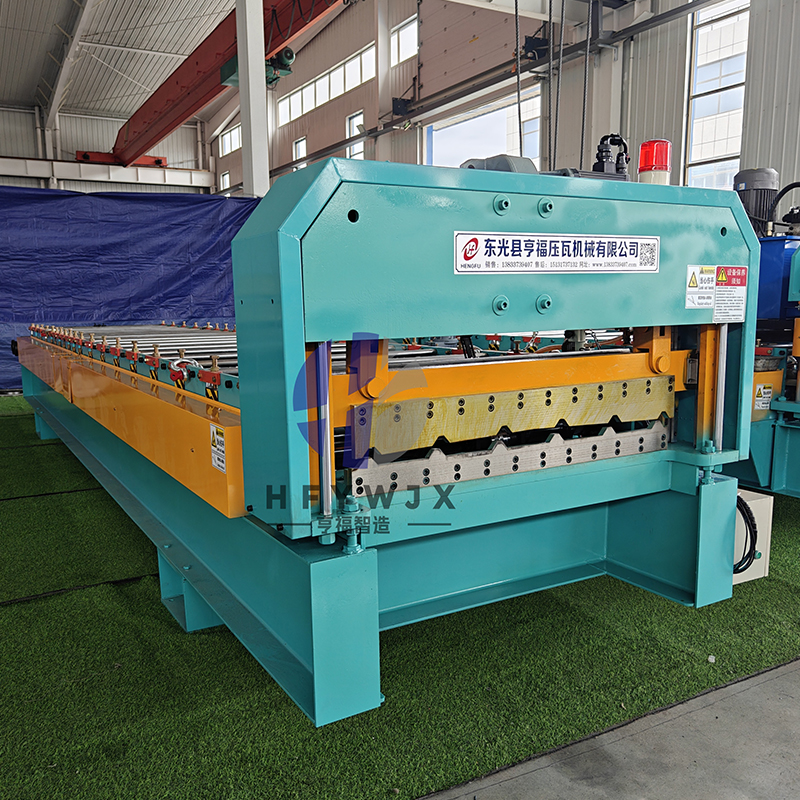
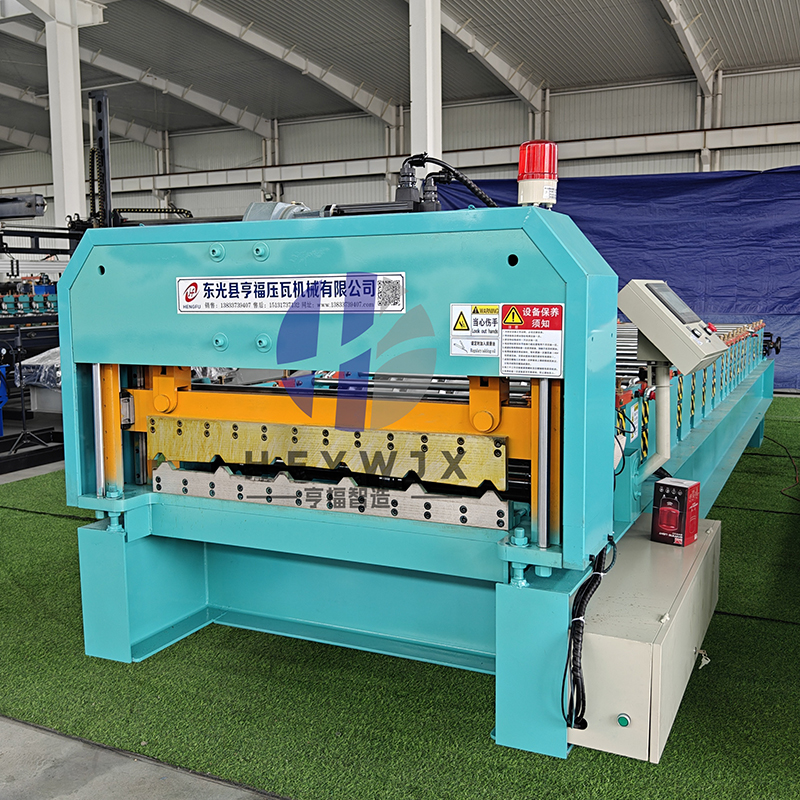
A well-configured metal roof roll forming machine ensures that each rib height, effective width, overlap section, and locking seam remains within defined tolerance ranges.
In high-speed continuous production, maintaining this stability requires both mechanical rigidity and intelligent control systems.
Core Factors Influencing Tolerance Control
1. Roll Tooling Design and Machining Precision
Rollers are the heart of profile formation. Their machining accuracy directly affects the final panel shape.
Key considerations include:
·High-precision CNC machining
·Proper forming sequence design
·Hardened roller materials for durability
·Accurate alignment between upper and lower shafts
Progressive forming must be engineered to distribute bending stress evenly across stations. Poorly designed tooling can cause edge waves, twisting, or dimensional drift during continuous operation.
2. Machine Frame Stability and Structural Rigidity
A rigid frame structure prevents vibration and deflection during operation. When the forming line operates at high speed, any structural instability can affect tolerance consistency.
A heavy-duty metal roof roll forming machine typically features:
·Thick steel base construction
·Reinforced side panels
·Precision-ground shafts
·Stable gearbox transmission
These features ensure consistent forming pressure and uniform material flow.
3. Material Thickness Consistency
Incoming coil material variation directly impacts profile accuracy. Differences in thickness, yield strength, or surface coating may lead to springback variation.
To minimize this issue:
·Use reliable coil suppliers
·Measure material thickness before loading
·Adjust forming parameters accordingly
Springback compensation must be considered during tooling design to maintain strict dimensional tolerances.
4. Precision Feeding and Leveling Systems
Before forming begins, the coil must pass through a leveling system to eliminate residual stress and curvature.
A high-quality feeding system ensures:
·Smooth strip entry
·Stable feeding speed
·Accurate width alignment
Improper feeding may cause profile deviation, asymmetry, or inconsistent rib geometry.
Advanced Technologies for Improved Tolerance Control
Servo-Controlled Cutting Systems
Flying shear systems with servo motors allow synchronized cutting without stopping the production line. This maintains length accuracy while preserving production efficiency.
Length tolerance can be controlled within tight margins through encoder feedback and automated correction.
PLC and Digital Monitoring
Modern metal roof roll forming machines integrate PLC systems with touchscreen interfaces. These systems allow:
·Real-time speed adjustments
·Parameter memory storage
·Production data tracking
·Alarm systems for deviation detection
Digital monitoring ensures stable operation across long batch production cycles.
Inline Quality Inspection
Some advanced production lines integrate laser or sensor-based measurement systems. These detect deviations in:
·Effective width
·Rib height
·Panel straightness
Early detection prevents large-scale rejection during high-volume production.
Managing Springback and Stress Distribution
Springback is a common challenge in cold roll forming. After bending, metal tends to partially return toward its original shape. This affects final dimensions.
To control springback:
·Optimize forming pass design
·Use gradual bending sequences
·Apply over-bending compensation
·Ensure consistent material properties
Finite element simulation is often used during equipment development to predict deformation behavior and refine tooling geometry.
Batch Production and Dimensional Consistency
For manufacturers handling bulk roofing panel orders, maintaining tolerance stability across thousands of meters is critical.
Key production management strategies include:
·Scheduled roller inspection
·Calibration verification before each production batch
·Continuous lubrication system maintenance
·Statistical process monitoring
Consistency across production batches demonstrates manufacturing reliability and strengthens long-term supply partnerships.
Reducing Waste Through Precision Control
Accurate forming not only ensures structural performance but also reduces material waste. Dimensional deviation often results in rejected panels or on-site trimming.
A properly calibrated metal roof roll forming machine helps:
·Reduce rejection rates
·Improve installation efficiency
·Lower overall project cost
·Enhance brand reputation
Precision directly contributes to cost efficiency in large-scale manufacturing.
Energy Efficiency and Operational Stability
Stable tolerance control also improves operational efficiency. When forming parameters are optimized:
·Power consumption becomes more predictable
·Mechanical wear is reduced
·Downtime decreases
·Maintenance frequency is minimized
Long-term stable operation supports scalable Production capacity and reliable batch supply performance.
Future Trends in Precision Roll Forming
As industrial automation evolves, tolerance control is becoming increasingly data-driven. Emerging trends include:
·IoT-based performance monitoring
·Predictive maintenance systems
·AI-supported defect detection
·Fully automated production lines
These advancements further enhance the precision and repeatability of roofing panel manufacturing.
Digitalization allows manufacturers to analyze forming data and continuously refine production accuracy.
Conclusion: Precision Defines Performance in Metal Roof Roll Forming Machine Production
A metal roof roll forming machine plays a decisive role in ensuring profile accuracy and tolerance control in modern roofing manufacturing. From tooling precision and structural rigidity to automation systems and quality monitoring, every component influences dimensional stability.
For a professional Manufacturer with advanced Production capability and reliable batch supply capacity, precision control is not merely a technical requirement—it is a competitive advantage.
By integrating optimized tooling design, digital control systems, and disciplined maintenance strategies, manufacturers can achieve consistent, high-quality roofing panel output at scale.
In high-volume industrial roofing production, profile accuracy is the foundation of performance, and a properly engineered metal roof roll forming machine is the key to delivering dependable results in every batch.
References
GB/T 7714:Groover M P. Fundamentals of modern manufacturing: materials, processes, and systems[M]. John Wiley & Sons, 2010.
MLA:Groover, Mikell P. Fundamentals of modern manufacturing: materials, processes, and systems. John Wiley & Sons, 2010.
APA:Groover, M. P. (2010). Fundamentals of modern manufacturing: materials, processes, and systems. John Wiley & Sons.