

Double Layer Roll Forming Machines: Dual Profile in One Line
writer:fdcf9e6 release time:2026-11-16 17:49:36 Views:128frequency
Double layer roll forming machines give a small or medium fabricator the ability to produce two different profiles on a single line. By stacking two sets of roller stations vertically, one machine does the work of two, saving floor space, reducing capital cost, and broadening the product range without buying separate equipment. This guide explains in detail how a double layer machine is built, the common profile configurations, how layer changeover works, the real cost and space savings compared with separate machines, and how to decide whether a double layer line is the right investment for a particular business.
1. What Is a Double Layer Roll Forming Machine?
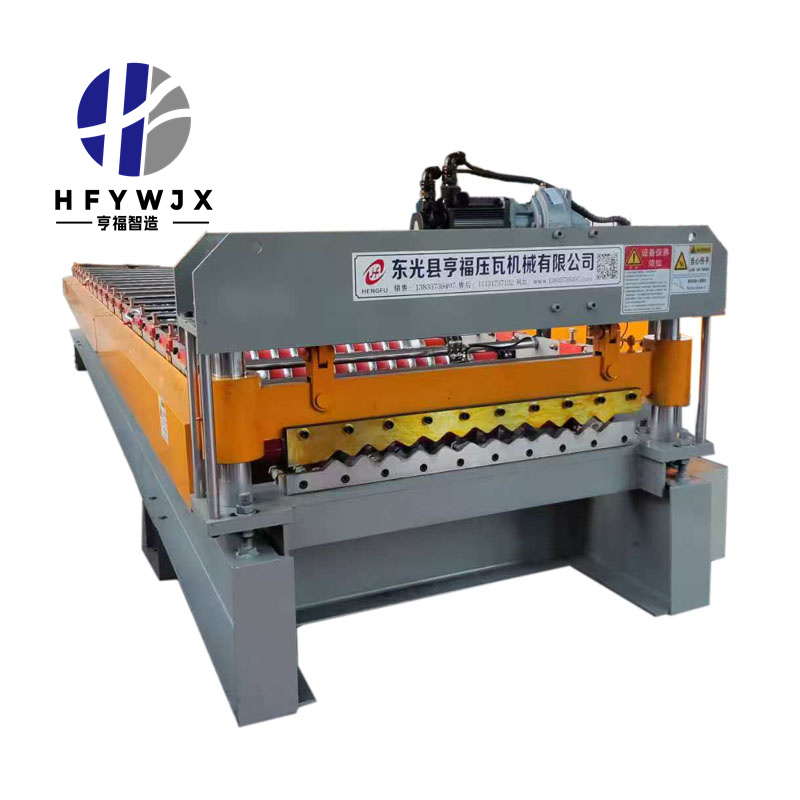
A double layer, or dual-layer, machine has two independent roller sets arranged one above the other on the same frame. Each layer is tooled for a different profile, and the operator engages whichever layer is needed for the current order. The uncoiler, entry guide, control system, hydraulic cut-off, and run-out table are shared between the two layers, while the forming rollers themselves are separate. The result is a single footprint that can output two distinct products.
The most common configuration pairs corrugated sheet on one layer with trapezoidal IBR sheet on the other, covering the two highest-volume roofing profiles. Other pairings include trapezoidal with tile-effect, roofing with wall cladding, or two different trapezoidal rib sizes. The exact combination is chosen around the profiles the local market actually buys.
2. Why Choose a Double Layer Line
2.1 Floor Space Savings
Two separate single-layer machines each need their own full length of floor space, plus clearance for access and coil handling. A double layer machine occupies roughly the footprint of one machine because the second roller set is stacked vertically rather than placed end to end. For a small workshop with limited square meters, this is often the decisive advantage. It also leaves room for additional equipment, storage, or a wider working aisle.
2.2 Lower Capital Investment
A double layer line costs somewhat more than a single-layer machine, typically 20–30% more, but it is significantly cheaper than buying two complete separate machines, because the frame, uncoiler, drive, hydraulics, cut-off, and controls are shared rather than duplicated. For a business that needs two profiles, the double layer is the lowest-cost route to that capability. The saving can be redirected into coil inventory, tooling, or working capital.
2.3 Product Flexibility
Offering two profiles means the business can serve a wider set of customers and projects. If demand for one profile slows, the other can keep the line running. Many small fabricators start with a corrugated-plus-trapezoidal double layer precisely because those two profiles cover most agricultural, industrial, and budget commercial roofing work, giving a broad market reach from day one.
2.4 Shared Systems and Maintenance
Because the uncoiler, drive, hydraulics, and control system are shared, there are fewer distinct machines and fewer duplicate components to maintain. Operators only need to learn one control interface and one set of operating procedures. Spare parts inventory is simpler than it would be for two separate machines.
3. Common Double Layer Configurations
| Layer One | Layer Two | Market Position |
|---|---|---|
| Corrugated sheet | Trapezoidal IBR | Most common, broad industrial |
| Trapezoidal sheet | Tile-effect sheet | Commercial plus premium residential |
| Roofing panel | Wall cladding panel | Complete building envelope |
| Wide rib panel | Narrow rib panel | Residential and commercial mix |
4. How Layer Changeover Works
Switching between layers is a mechanical and feeding adjustment rather than a full tooling change. The operator raises or lowers the relevant roller set, or engages the corresponding drive, and adjusts the entry guide and feed path to align the strip with the active layer. On a well-designed machine this takes roughly 5–10 minutes, after which a test piece confirms the setup before the batch runs.
It is important to understand that the two layers do not run simultaneously. Only one layer operates at a time, because the strip follows a single path through the machine. This is not a practical limitation for most fabricators, who schedule one profile per production run anyway. The machine is designed for fast switching between runs, not for parallel production of two products.
5. Double Layer vs Two Separate Machines
5.1 Cost Comparison
Two separate single-layer machines duplicate every major system: two frames, two uncoilers, two drives, two hydraulic units, two cut-offs, and two control panels. A double layer shares all of those and only duplicates the forming rollers. The total purchase price is therefore much lower for the same two-profile capability. The trade-off is that separate machines can run at the same time, while the double layer runs one profile at a time.
5.2 Throughput Trade-Off
A high-volume producer that genuinely needs both profiles running continuously across multiple shifts is better served by two dedicated machines, because the double layer cannot produce them in parallel and changeover time, though short, still interrupts flow. A smaller business whose orders alternate between profiles, or whose total volume fits within one line's capacity, loses little or nothing from the single-path limitation and gains the cost and space savings.
| Factor | Double Layer | Two Separate Machines |
|---|---|---|
| Floor space | One machine footprint | Two full footprints |
| Capital cost | Lower for two profiles | Higher, duplicated systems |
| Parallel production | Not possible | Yes, both can run |
| Changeover | 5–10 minutes between layers | No changeover needed |
| Best for | Small-mid, mixed orders | High-volume continuous plants |
6. Build Quality Points to Check
6.1 Frame Rigidity
Because the frame carries two roller sets, it must be heavy and rigid enough to avoid deflection in either layer. A light, flexible frame will produce dimensional problems and vibration. Look for a welded, stress-relieved frame with thick side plates and properly machined mounting surfaces. The vertical adjustment mechanism should be solid and lock firmly so the active layer stays in position during a run.
6.2 Roller and Shaft Quality
Both roller sets should be hardened tool steel, precision ground, with adequate shaft diameter and quality bearings. The rollers determine the profile quality regardless of which layer runs, so neither set should be treated as a cheaper secondary. Check that the adjustment and engagement mechanism keeps the correct roller gap and alignment on both layers.
6.3 Shared Cut-Off and Hydraulics
The shared cut-off must handle both profiles cleanly. Some machines use a cut-off die that can be changed or adjusted for the two profiles, while others use a universal shear. Verify that cuts are clean and square on both layers and that the hydraulic unit has enough capacity for the cut-off and any punching without pressure drop.
7. Operating and Scheduling Practice
Efficient use of a double layer comes from grouping orders by profile so the machine runs each layer in batches rather than switching back and forth repeatedly. Although changeover is quick, minimizing it still saves time. Operators should keep the entry guide settings documented for each layer and run a first-piece check after every changeover. Good scheduling lets one line serve a mixed customer base while keeping downtime low and coil changes organized.
8. Workshop Layout Considerations
Even though the double layer saves horizontal space, the stacked roller sets can make the machine taller, so workshop ceiling height and overhead lifting clearance must be checked. The layout still needs coil access on the uncoiler side and a long run-out table at the output, with enough room to handle the longest panels. A level concrete floor and correct power supply are essential. Planning the layout around material flow — coil in, finished panels out — keeps the compact line efficient.
9. Who Should Buy a Double Layer Machine
- Startups and small fabricators needing two profiles but limited by budget and space.
- Growing businesses whose order mix alternates between two common profiles within one line's capacity.
- Workshops with constrained floor space where two separate machines simply will not fit.
- Businesses entering a new segment who want a second profile without committing to a second full machine.
It is less suitable for high-volume plants that need both profiles running in parallel, or for operations that will only ever produce one profile, where a dedicated single-layer machine is the simpler and cheaper choice.
10. FAQ
- Is profile quality the same as a single-layer machine? — Yes. The forming rollers are equivalent to single-layer tooling; only the arrangement is stacked. A well-built double layer produces identical quality on both layers.
- Can I choose any two profiles? — Most suppliers build custom combinations. Specify the two profiles and they will design the layers, provided the profiles fit the machine's thickness and width capacity.
- Do both layers need separate coils? — No. The uncoiler is shared and one coil runs at a time through whichever layer is active.
- How much does a double layer cost? — Typically between roughly $15,000 and $35,000 depending on profiles, automation, and accessories, sitting between one single-layer machine and two separate machines.
- Can both layers run together? — No, only one layer operates at a time. The machine is designed for fast switching between production runs.
- How long does changeover take? — Around 5–10 minutes on a good machine, including adjusting the feed path and running a test piece.
- Will the taller machine fit my workshop? — Check ceiling height and crane clearance before ordering, because stacked layers add height even though they save floor space.
11. Conclusion
A double layer roll forming machine is a smart, economical solution for a small or medium fabricator that needs two profiles but has limited space and capital. It duplicates only the forming rollers while sharing the frame, uncoiler, drive, hydraulics, cut-off, and controls, delivering two-profile capability at a much lower cost and in one footprint. The key limitation is that layers run one at a time rather than in parallel, which matters only to high-volume plants. For everyone else — especially startups and mixed-order job shops — the double layer offers the best balance of flexibility, cost, and space, and it remains one of the most popular entry points into metal roofing fabrication.
References
- Metal Construction News — Dual Layer Roll Forming Equipment Review
- Roofing Contractor Magazine — Equipment Buying and Layout Guide
Writer Michael Chen
Michael Chen is a mechanical engineer and technical writer with more than 14 years of hands-on experience in the roll forming and sheet metal fabrication industry. He has commissioned over 120 roll forming lines across 20 countries, covering roofing, structural purlin, cable tray, door frame, and custom profile applications. He holds a Bachelor of Engineering degree in Mechanical Design and Manufacturing, and his published work focuses on practical equipment selection, process optimization, defect troubleshooting, and lifecycle maintenance.